AI Won’t Replace Your Judgment. It Will Expose Whether You Had Any.

Everyone in AI repeats the same comforting sentence: AI won’t replace human judgment. It’s true. It’s also the least interesting part of what’s happening.
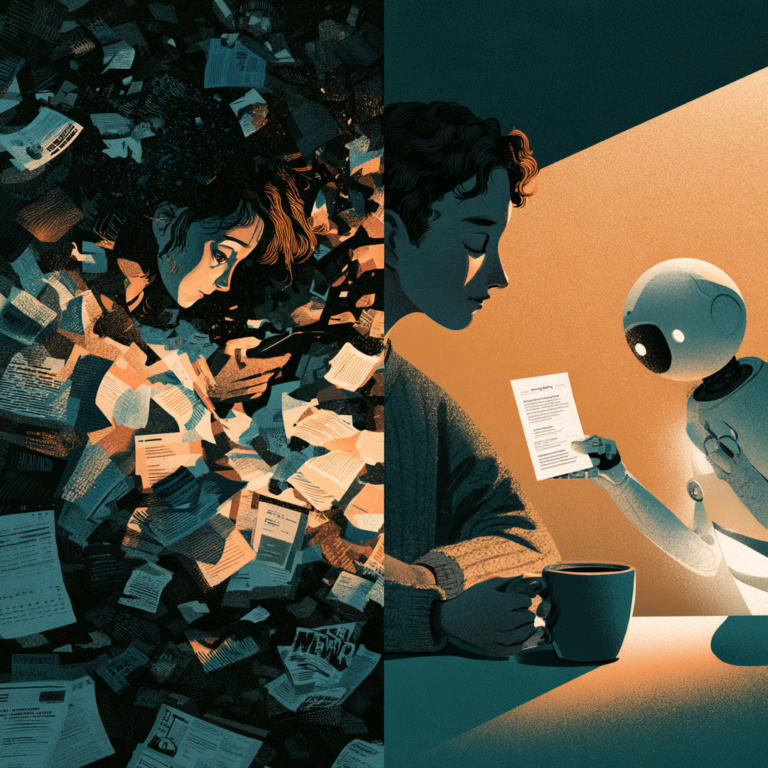
AI doesn’t need to replace your judgment. It does something far more uncomfortable: it removes every hiding place your judgment used to have — and then it works at full speed, in public, with your name on the output. What’s left standing after that isn’t a replacement story. It’s an exposure story.
AI is not a replacement test. It’s an audit.
What the sentence actually means
Judgment is the ability to decide well when the information is incomplete, the options are all imperfect, and the outcome actually matters. It’s not knowledge — knowledge is what the model has. It’s not intelligence, either. Plenty of brilliant people make terrible decisions, and plenty of ordinary people make consistently good ones. Judgment is the layer where values, experience, probabilities, and consequences get weighed — the layer where you are the algorithm.
For most of modern work, weak judgment was easy to hide, because three kinds of camouflage covered it:
Scarcity. “We didn’t have the data.” For a century, not knowing was a legitimate excuse. Research was slow, information was expensive, and a bad call could be blamed on what nobody could have known. AI burned that excuse down. The data is a prompt away now. When the answer was available and you still chose wrong, the shortage wasn’t information. It was judgment.
Time. “There was no time to check.” Production used to be the bottleneck — drafting, formatting, calculating, compiling. Doing the work consumed the week, so nobody asked whether the work was the right work. AI collapsed production time to nearly zero, which means the only remaining step is the decision itself. When the draft takes four minutes, “I was rushed” stops being a defense.
Process. Busywork looked like diligence. A person could fill a career producing competent-looking material — reports, decks, plans — and the sheer volume masked the fact that they couldn’t tell a good one from a bad one. AI produces competent-looking material by default. Which means the human contribution is now concentrated in exactly one place: telling the difference.
That concentration is the whole story. When production is free, evaluation is everything — and evaluation can’t be faked, because the results arrive and grade it for you.
The psychology: why exposure hurts
Automation bias. Decades of human-factors research document a reliable tendency: people over-trust automated output, especially when it’s presented confidently and they’re under pressure. Pilots have followed faulty instruments into the ground; clinicians have accepted wrong computer suggestions against their own correct instincts. AI output arrives fluent, formatted, and certain — and the human brain reads fluency as truth. The first judgment AI exposes is whether you can distrust a confident answer.
Cognitive offloading. We have always outsourced memory and skill to tools, and the trade is usually worth it. But offloading has a shadow: the delegated skill atrophies. Studies of habitual GPS use find exactly what you’d predict — people who navigate by instruction get worse at navigating. Delegate your first drafts for a year and your drafting judgment dulls. Delegate your thinking and something more important dulls. The tool doesn’t take the skill. You hand it over, one convenience at a time.
The fluency trap, and its cruellest twist. Here’s the asymmetry that makes AI an exposure machine: judging output requires the very skill the output replaces. A weak writer cannot reliably tell whether AI wrote something good. A weak analyst cannot tell whether the analysis is sound. The people least equipped to evaluate are the least able to know they’re unequipped — and AI hands them unlimited confident material to approve. Psychologists call the underlying pattern the Dunning–Kruger effect. AI industrialises it.
Noise. Daniel Kahneman’s late-career work documented “noise”: the wild variability of human judgment — the same professional, the same case, different day, different verdict. AI gives everyone in an organisation the same baseline output. Against a constant background, your variability becomes visible. The colleague whose decisions swing with mood, fatigue, and whoever talked to them last is suddenly measurable. So is the one whose calls are steady.
And the hopeful finding, from Philip Tetlock’s forecasting research: judgment is trainable. The best forecasters weren’t the most credentialed — they were the ones who thought in probabilities, hunted for base rates, and updated their views in small increments when evidence arrived. AI doesn’t change that recipe. It just raises the stakes of ignoring it.
The business consequences
The rubber stamp is now a job description problem. Every organisation has review layers that were really approval theatre — managers who “reviewed” work they couldn’t actually evaluate. When AI generates the work, the reviewer’s judgment becomes the product. Companies are discovering, hire by hire and quarter by quarter, which of their reviewers ever had any.
Hiring flips. The take-home test used to measure production skill. Now it mostly measures prompting. The interview has to do the real work: give the candidate AI output with a planted flaw and watch whether they catch it. The scarce hire is no longer the person who can produce the thing. It’s the person who can be trusted to say this one, not that one — and here’s why.
Accountability gets an audit trail. AI-assisted work leaves artifacts: prompts, drafts, alternatives, approvals. For the first time, an organisation can reconstruct how a decision was made, not just who signed it. Herbert Simon saw the shape of this fifty years ago: “A wealth of information creates a poverty of attention.” He might have added: and a surplus of evidence about who was paying it.
Guardrails are judgment, written down. This is the part most people miss. When you set an AI agent loose, the quality of the outcome is determined almost entirely by the quality of the instructions, limits, and tripwires you gave it — which is to say, by your judgment, expressed in advance. We ran that experiment over at MentorNet: an AI agent given $500 and thirty days produced results that tracked the guardrails, not the model. The agent didn’t have judgment. It had ours, compiled.
You don’t rise to the level of your tools. You fall to the level of your instructions — and your instructions are your judgment, frozen in text.
How to build judgment in the AI era
Exposure is only bad news if you refuse the training. Six practices, all cheap, all unglamorous:
- Decide before you ask. Write your own answer, recommendation, or number first — then consult the AI. The gap between your draft and its draft is the most honest diagnostic of your judgment you’ll ever get, and it costs two minutes.
- Keep a decision journal. Record what you decided, why, and what you expected. Review it quarterly. Judgment improves with feedback, and most professionals never give themselves any.
- Make the AI argue the other side. “Steelman the case against this plan” is the highest-value prompt in business. If your decision can’t survive a machine’s best counterargument, it won’t survive the market’s.
- Learn your field’s base rates. How often do projects like this actually succeed? What does this usually cost? Tetlock’s superforecasters started from the base rate and adjusted. Everyone else starts from the story and regrets it.
- Keep manual reps in your core skill. Do the thing unaided often enough to stay able to judge it. Pilots hand-fly on purpose. Writers, analysts, and coders should too.
- Pre-mortem the plan. “It’s a year from now and this failed. What happened?” AI will generate twenty failure modes in a minute. Your judgment is choosing which three are real.
The mirror
There’s a reason this sentence makes people nod and then go quiet. “AI won’t replace you” is a lullaby. The exposure version is a mirror — and mirrors don’t grade on a curve. They show you the evaluator you’ve been all along, at the exact moment the world stops paying for anything else you used to hide behind.
But read it one more time, and the threat flips into an invitation. If AI exposes judgment, then for the first time in history, good judgment is directly visible — and what’s visible can be recognised, rewarded, taught, and mentored. The people who’ve quietly made good calls for years, buried under other people’s production metrics, are about to become very easy to spot.
AI won’t replace your judgment. It will expose whether you had any.
The good news: unlike the audit, the training is still entirely up to you.
Related reading: Why Knowledge Is Becoming Free and Wisdom Is Becoming Priceless — the companion essay on why judgment became the scarce resource of the AI age.